Cross-Platform Networks Reshaping How Regular Bingo Players Build Their Tactics
Gisela Otto · Nov 13, 2026

Cross-Platform Networks Reshaping How Regular Bingo Players Build Their Tactics
Regular bingo participants now move between physical halls, mobile apps, and online rooms within the same day, and these connections create feedback loops that alter how they select games, manage budgets, and time their sessions. Data from multiple jurisdictions shows that players who maintain accounts across three or more platforms adjust their number-selection patterns more frequently than those limited to a single venue or app.
Platform Linkages and Daily Decision Making
Operators link loyalty points across land-based and digital channels so that a session in a traditional hall feeds directly into bonus credits on a mobile app; participants respond by tracking point accumulation rates and switching venues or devices when thresholds approach. Research from the Canadian Centre for Gaming Research indicates that such integrations increase session frequency by 18 percent among players who check unified dashboards daily. Those dashboards display real-time prize pools, jackpot rollovers, and available promotions from multiple operators, allowing users to compare expected value before committing to a game.
November 2026 Data Releases Highlight Pattern Shifts
Reports released in November 2026 from gaming authorities in Nevada and several Australian states documented measurable changes in player behavior after major operators synchronized their reward ledgers. Players began clustering their activity around synchronized draw times rather than fixed local schedules, and they started abandoning games that lacked cross-platform carry-over benefits. Observers note that this clustering produces shorter but more frequent log-ins, with average session length dropping while total weekly participation hours remain stable.
Strategy Adjustments in Multi-Device Environments
Participants who use both hall-based and app-based play develop hybrid tactics such as reserving high-stakes paper cards for live events while using mobile interfaces for rapid number marking during promotional windows. One study from the University of Nevada Las Vegas tracked 1,200 regular players over six months and found that those with linked accounts altered their card-purchasing volume in response to shared leaderboards that aggregate performance across formats. The same study recorded a 12 percent rise in the use of automated daubing tools once players realized that progress carried between platforms.
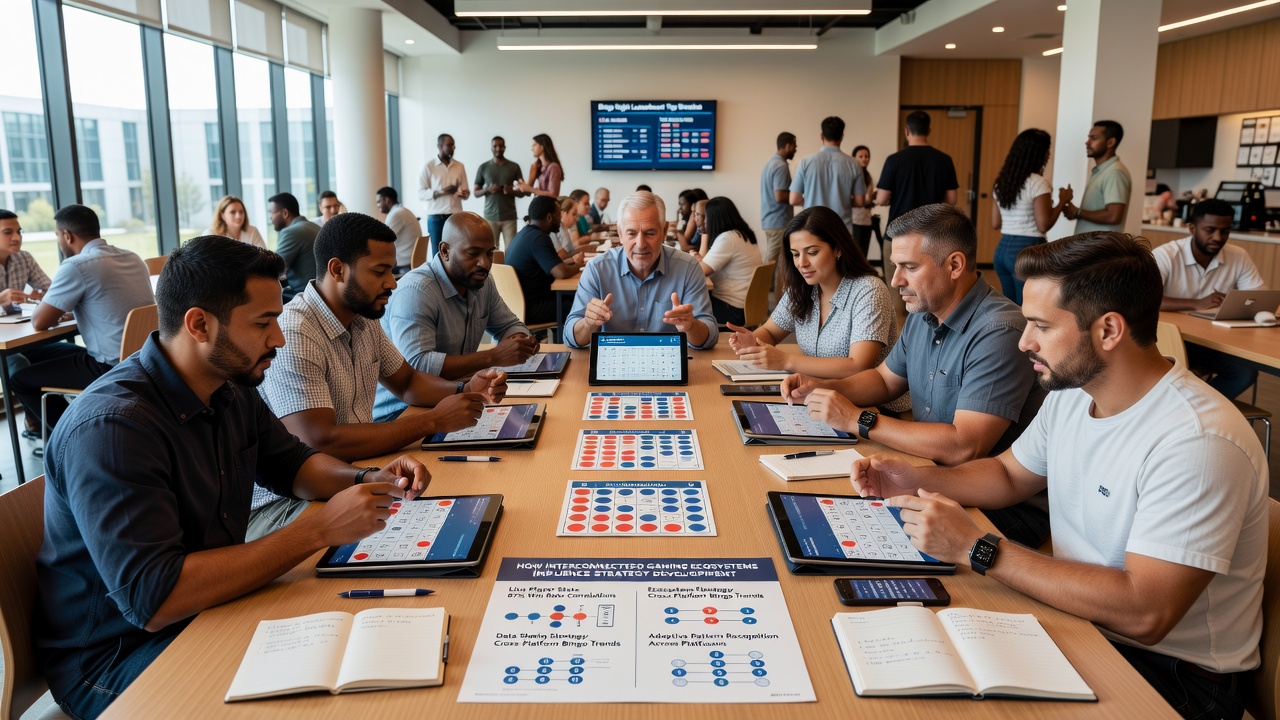
Budget allocation also changes when wallets are unified. Instead of treating each platform as a separate spending pool, users set weekly limits that apply across all channels; software then enforces those caps automatically. Figures released by the Australian Communications and Media Authority in late 2026 show a corresponding decline in single-session overspending among accounts that activate these global controls.
Information Exchange and Community Influence
Interconnected ecosystems include chat functions and shared social features that let participants exchange observations about payout frequencies or upcoming events. Regular players report monitoring these channels to decide whether to join a particular draw or wait for a linked promotion elsewhere. Because data from one platform populates notifications on others, timing decisions become more granular; users now weigh not only the advertised jackpot but also the likelihood that the same prize will appear on a sister site within hours.
Conclusion
Interconnected gaming systems supply regular bingo participants with consolidated data streams, unified reward structures, and synchronized scheduling tools that collectively reshape daily tactics. Regulatory updates from November 2026 confirm that these linkages continue to expand, and participation metrics show corresponding adjustments in session length, device choice, and spending patterns. Players who engage with multiple linked platforms demonstrate measurable differences in how they select games, allocate funds, and respond to promotional timing compared with those who remain on isolated channels.